
E 30 – EI 120
Fire-Resistant Glass
Integrity and insulating fire glass supplied and fitted into tested frames.
Learn more →From the NE30 district outwards, we arrange insulated fire glass for buildings across Tynemouth, matching glass, frames and seals to tested evidence rather than guesswork.
Tell us what you need. We reply with next steps and a guide price.
Insulated fire glass, classified EI, is glazing that maintains integrity and keeps the temperature rise on the non-fire side within set limits for the rated time. It is usually made of several glass panes bonded with interlayers that foam into an insulating barrier when heated, or with a clear gel that absorbs heat.
Each step up in rating adds layers, so EI 120 is far thicker and heavier than EI 30. The frame has to be designed for it.
Insulating fire glass should be stored dry, upright and away from direct sun before fitting.
Some EI products are internal only. External use needs a product and edge seal approved for UV and weather.
Building work in England is covered by the Building Regulations 2010, with fire safety guidance in Approved Document B and impact safety guidance for glazing in Approved Document K.
Once a building is in use, the Regulatory Reform (Fire Safety) Order 2005 requires the responsible person to maintain fire safety measures, including fire-resisting glazing. The Fire Safety (England) Regulations 2022 add duties for multi-occupied residential buildings, including fire door checks in buildings over 11 metres.
We cover Tynemouth and the surrounding postcode districts, including NE30, NE29, NE33, NE26. Nearby towns we also serve include North Shields, South Shields, Whitley Bay. Newcastle upon Tyne, around 13 km from Tynemouth, is the largest town in the same coverage area.
You receive the classification references, glass marks and installation photographs for your fire safety records.
Designs follow the building and fire safety rules that apply in England, not a one-size-fits-all approach.
We can phase work in Tynemouth around residents, staff or pupils, with out-of-hours options.
Insulated fire glass applies to many building types in Tynemouth, including healthcare buildings and offices.
Yes, in normal conditions. It turns opaque only when heated in a fire.
Yes. Once the interlayers have reacted, the glass has done its job and must be replaced.
Survey timing in Tynemouth depends on access, the size of the building and how urgent the defect is. Tell us your deadline when you enquire and we will confirm a date before you commit.
Building work in Tynemouth follows the Building Regulations 2010 and Approved Document B, and occupied buildings are covered by the Regulatory Reform (Fire Safety) Order 2005.
Integrity and insulating fire glass supplied and fitted into tested frames.
Learn more →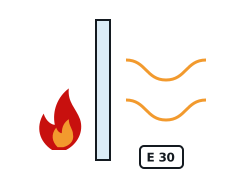
E and EW glass where flames and hot gases must be stopped.
Learn more →
Glazed screens and doors on protected stairs, lobbies and corridors.
Learn more →
Butt-jointed fire glass walls with minimal frames.
Learn more →Send drawings, a fire risk assessment action or photos of the glass marks.
We measure each opening in Tynemouth and check what the existing frames can accept.
We set out the system, glass, evidence and programme, with a fixed price.
We install, photograph seals and fixings before closing up, and hand over the schedule.
Send sizes, photos of any glass marks or your inspection report and we will come back with the right tested system.