
Scotland · 17 postcode districts
Scottish Borders fire-resistant glass
Fire-resistant glass across Scottish Borders covers 17 postcode districts in the TD, EH postcode areas. Every job is built around a tested system.
E 30 – EI 120ScotlandTDEH
Quote for Scottish Borders
Tell us what you need. We reply with next steps and a guide price.
What our fire-resistant glass service includes in Scottish Borders
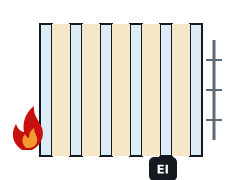
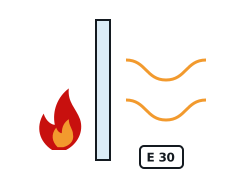
Fire-resistant glass is glazing that has been tested, as part of a complete glazed system, to hold back fire for a set time. It is classified by what it stops: E (integrity) keeps flames and hot gases on the fire side, EW also limits the heat radiated through the glass, and EI (integrity and insulation) also limits the temperature rise on the protected side, so people can pass it more safely.
- Impact-classified build-ups for critical locations
- Insulating (EI) intumescent-interlayer and gel-filled glass
- Intumescent glazing seals, tapes and gaskets to the tested specification
Key checks for Scottish Borders projects
Which classification do you actually need?
The fire strategy or building control drawings set the rating for each element. Integrity-only glass is cheaper and thinner, but its use on escape routes is restricted; insulating glass carries far fewer restrictions because people can pass it safely during a fire.
Can any fire glass go in any fire-rated frame?
No. A frame is only rated with the glass types and pane sizes it was tested or assessed with. We check the frame's evidence before quoting, and if the existing frame is unknown we say so and price the options.
Weight and handling
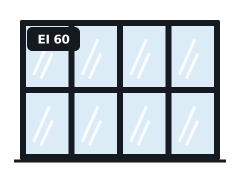
Insulating fire glass gets thicker and heavier as the rating rises. Large EI 60 and EI 120 panes often need lifting equipment and a frame designed for the load, which we plan before the delivery date.
Which rules apply in Scotland?
Scotland Which rules apply?
In Scotland, building work needs a building warrant under the Building (Scotland) Regulations 2004, with fire guidance in Section 2 of the Building Standards Technical Handbooks rather than Approved Documents.
For relevant premises, the Fire (Scotland) Act 2005 and the Fire Safety (Scotland) Regulations 2006 place duties on the duty holder to maintain fire safety measures, which include fire-resisting glazing.
Scottish guidance has its own approach to escape routes and compartmentation, so glazing designs are checked against the Technical Handbooks and the warrant drawings.
Places we cover in Scottish Borders
We cover fire-resistant glass in Galashiels and across Scottish Borders, including Hawick, Peebles, Kelso, Selkirk.
FAQs for Scottish Borders
Can you match glass that is already installed?
Often, yes. We read the marks on the existing panes and check them against the frame evidence. Where the original product is discontinued we look for an alternative covered by the same evidence or a formal assessment.
What is the difference between E, EW and EI fire glass?
E is integrity only: it stops flames and hot gases passing for the rated time. EW adds a limit on radiated heat through the glass. EI adds insulation, keeping the unexposed face below set temperature rises so people can pass it safely. The number after the letters is the time in minutes.
Is toughened glass fire-resistant?
Ordinary toughened safety glass is not. It can shatter early in a fire. Fire-resistant integrity glass is specially processed or formulated and only gains a rating when fitted in a tested frame and glazing system.
Which parts of Scottish Borders do you cover?
All of it: Galashiels, Hawick, Peebles, Kelso, Selkirk and every district in the TD, EH postcode areas.
Related
Related services in Scottish Borders

Process
From enquiry to handover in Scottish Borders
Tell us what you have
Send drawings, a fire risk assessment action or photos of the glass marks.
Survey
We visit Scottish Borders to measure, record existing marks and check the frames and substrate.
Quote and evidence
Your quote lists each item with its classification and the evidence it relies on.
Install and hand over
Installation to the system details, then a handover pack with photographs and evidence.