
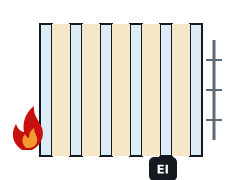
EI 30 – EI 120
Insulated Fire Glass (EI)
EI 30 to EI 120 glass that blocks heat as well as flames.
Learn more →Looking for fire-resistant glass in Morecambe? We survey, supply and install tested fire-rated glazing for blocks of flats, offices and other buildings in and around Morecambe, including the LA4 postcode district.
Tell us what you need. We reply with next steps and a guide price.
We supply and fit fire-resistant glass into new and existing fire-rated frames, matching the glass type, thickness, beads, seals and fixings to the test or assessment evidence for that frame. The glass on its own does not carry a rating; the combination does, so we start every job by identifying the system you have or need.
Survey visits can be arranged anywhere in Morecambe, including the LA4, LA3 districts, and in nearby Lancaster, Fleetwood, Thornton-Cleveleys. Preston, around 35 km from Morecambe, is the largest town in the same coverage area.
The fire strategy or building control drawings set the rating for each element. Integrity-only glass is cheaper and thinner, but its use on escape routes is restricted; insulating glass carries far fewer restrictions because people can pass it safely during a fire.
Most fire glass is permanently marked with its product and classification. We record the marks, pane sizes and evidence references on handover so whoever is responsible for fire safety can show what is installed.
Glass in doors, side panels and low-level positions has to meet impact safety rules as well as the fire rating. Most modern fire glass carries an impact classification; old wired glass usually does not.
Building work in England is covered by the Building Regulations 2010, with fire safety guidance in Approved Document B and impact safety guidance for glazing in Approved Document K.
Once a building is in use, the Regulatory Reform (Fire Safety) Order 2005 requires the responsible person to maintain fire safety measures, including fire-resisting glazing. The Fire Safety (England) Regulations 2022 add duties for multi-occupied residential buildings, including fire door checks in buildings over 11 metres.
In higher-risk buildings, broadly 18 metres or seven storeys with two or more homes, the Building Safety Regulator is the building control authority. England is also phasing out BS 476 references from Approved Document B, with the remaining fire-resistance references due to go in September 2029.
Designs follow the building and fire safety rules that apply in England, not a one-size-fits-all approach.
Every quote in Morecambe identifies the tested system: frame, glass, beads, seals and fixings, within its pane-size limits.
You receive the classification references, glass marks and installation photographs for your fire safety records.
We can survey and quote for blocks of flats, offices and other building types in Morecambe.
E is integrity only: it stops flames and hot gases passing for the rated time. EW adds a limit on radiated heat through the glass. EI adds insulation, keeping the unexposed face below set temperature rises so people can pass it safely. The number after the letters is the time in minutes.
Ordinary toughened safety glass is not. It can shatter early in a fire. Fire-resistant integrity glass is specially processed or formulated and only gains a rating when fitted in a tested frame and glazing system.
Survey timing in Morecambe depends on access, the size of the building and how urgent the defect is. Tell us your deadline when you enquire and we will confirm a date before you commit.
We can give a guide range from photos and sizes, including a clear photo of any marks on the glass. A fixed price follows a survey.
EI 30 to EI 120 glass that blocks heat as well as flames.
Learn more →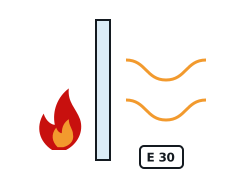
E and EW glass where flames and hot gases must be stopped.
Learn more →
Cracked or broken fire glass replaced to the original specification.
Learn more →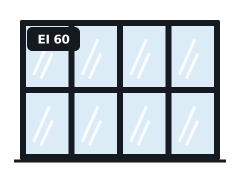
Internal glazed screens that keep compartments and corridors protected.
Learn more →Send drawings, a fire risk assessment action or photos of the glass marks.
A survey in Morecambe confirms sizes, access, existing evidence and fixing conditions.
You receive a written quote naming the tested system and classification.
Work is completed to the manufacturer's details and documented for your records.
Send sizes, photos of any glass marks or your inspection report and we will come back with the right tested system.