
Scotland · 99 postcode districts
Fire-Resistant Glass in Highlands and Islands
Fire-resistant glass across Highlands and Islands covers 99 postcode districts in the IV, PH, KW, HS postcode areas. Every job is built around a tested system.
E 30 – EI 120ScotlandIVPHKW
Quote for Highlands and Islands
Tell us what you need. We reply with next steps and a guide price.
Fire-Resistant Glass: an overview for Highlands and Islands
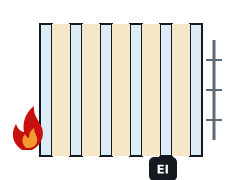
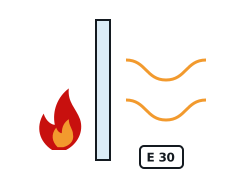
Fire-resistant glass is glazing that has been tested, as part of a complete glazed system, to hold back fire for a set time. It is classified by what it stops: E (integrity) keeps flames and hot gases on the fire side, EW also limits the heat radiated through the glass, and EI (integrity and insulation) also limits the temperature rise on the protected side, so people can pass it more safely.
- Impact-classified build-ups for critical locations
- Insulating (EI) intumescent-interlayer and gel-filled glass
- Intumescent glazing seals, tapes and gaskets to the tested specification
Before you order in Highlands and Islands
Which classification do you actually need?
The fire strategy or building control drawings set the rating for each element. Integrity-only glass is cheaper and thinner, but its use on escape routes is restricted; insulating glass carries far fewer restrictions because people can pass it safely during a fire.
Marking and records
Most fire glass is permanently marked with its product and classification. We record the marks, pane sizes and evidence references on handover so whoever is responsible for fire safety can show what is installed.
Weight and handling
Insulating fire glass gets thicker and heavier as the rating rises. Large EI 60 and EI 120 panes often need lifting equipment and a frame designed for the load, which we plan before the delivery date.
Scotland rules for fire glazing
Scotland Which rules apply?
In Scotland, building work needs a building warrant under the Building (Scotland) Regulations 2004, with fire guidance in Section 2 of the Building Standards Technical Handbooks rather than Approved Documents.
For relevant premises, the Fire (Scotland) Act 2005 and the Fire Safety (Scotland) Regulations 2006 place duties on the duty holder to maintain fire safety measures, which include fire-resisting glazing.
Scottish guidance has its own approach to escape routes and compartmentation, so glazing designs are checked against the Technical Handbooks and the warrant drawings.
Towns we cover in Highlands and Islands
Highlands and Islands coverage includes Inverness, the surrounding area and the IV, PH, KW, HS postcode areas (99 postcode districts). We also cover Fort William, Thurso, Wick, Nairn, Kirkwall, Lerwick, Stornoway.
Fire-Resistant Glass in Highlands and Islands: questions
How thick is fire-resistant glass?
Integrity glass can be similar in thickness to standard glass. Insulating glass is laminated from several layers, so it gets markedly thicker and heavier as the rating increases from EI 30 to EI 120.
What is the difference between E, EW and EI fire glass?
E is integrity only: it stops flames and hot gases passing for the rated time. EW adds a limit on radiated heat through the glass. EI adds insulation, keeping the unexposed face below set temperature rises so people can pass it safely. The number after the letters is the time in minutes.
Is toughened glass fire-resistant?
Ordinary toughened safety glass is not. It can shatter early in a fire. Fire-resistant integrity glass is specially processed or formulated and only gains a rating when fitted in a tested frame and glazing system.
Can you survey anywhere in Highlands and Islands?
Yes. We can arrange surveys anywhere in Highlands and Islands, including Inverness and the surrounding area.
Related
Related services in Highlands and Islands

like-for-like
Broken Fire Glass Replacement
Covering Inverness and Highlands and Islands
View details →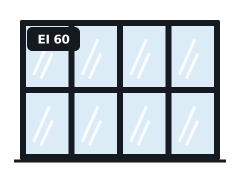
Process
What happens next
Share the details
Send the fire strategy extract, inspection report or a few photos of the openings.
Survey
We visit Highlands and Islands to measure, record existing marks and check the frames and substrate.
Quote and evidence
Your quote lists each item with its classification and the evidence it relies on.
Fit and record
We install, photograph seals and fixings before closing up, and hand over the schedule.