E 30 – EI 120
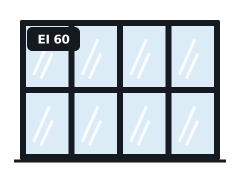
Fire-Rated Glazed Screens
Internal glazed screens that keep compartments and corridors protected.
Learn more →From the S18 district outwards, we arrange steel fire-rated screens for buildings across Dronfield, matching glass, frames and seals to tested evidence rather than guesswork.
Tell us what you need. We reply with next steps and a guide price.
Steel fire-rated screens use steel frame sections to hold fire-resistant glass, and they are the usual choice when a project needs slim sightlines with a high rating, large panes or heavy insulating glass. Steel keeps its strength well in fire and can carry the weight of thick EI glass over long spans.
Where steel glazing forms an external wall, thermal performance and condensation need designing in as well as the fire rating.
Steel profiles stay slim at higher ratings and carry heavy glass without bulky frames, which suits stair cores, lobbies and offices where light matters.
Steel screens with insulating glass are heavy. Fixings are taken from the system details and the substrate is checked to carry the load.
Building work in England is covered by the Building Regulations 2010, with fire safety guidance in Approved Document B and impact safety guidance for glazing in Approved Document K.
Once a building is in use, the Regulatory Reform (Fire Safety) Order 2005 requires the responsible person to maintain fire safety measures, including fire-resisting glazing. The Fire Safety (England) Regulations 2022 add duties for multi-occupied residential buildings, including fire door checks in buildings over 11 metres.
In higher-risk buildings, broadly 18 metres or seven storeys with two or more homes, the Building Safety Regulator is the building control authority. England is also phasing out BS 476 references from Approved Document B, with the remaining fire-resistance references due to go in September 2029.
Coverage around Dronfield includes the S18, S8, S17 districts and nearby Chesterfield, Sheffield, Staveley. Dronfield lies roughly 42 km from Derby, within our Derbyshire coverage.
If an existing frame in a Dronfield building has no traceable evidence, we say so and price the options rather than guess.
You receive the classification references, glass marks and installation photographs for your fire safety records.
We can phase work in Dronfield around residents, staff or pupils, with out-of-hours options.
Sector guides below cover blocks of flats, hotels and other buildings in Dronfield.
Yes. Single, double and in some systems sliding doors can be built into the screen, provided the combination is covered by the evidence.
Often slightly, especially at higher ratings, but steel can be the more economical route when panes are large or the rating is EI 60 and above.
Building work in Dronfield follows the Building Regulations 2010 and Approved Document B, and occupied buildings are covered by the Regulatory Reform (Fire Safety) Order 2005.
Yes. We plan phasing, out-of-hours work and temporary protection so the building can stay in use where the fire strategy allows.
Internal glazed screens that keep compartments and corridors protected.
Learn more →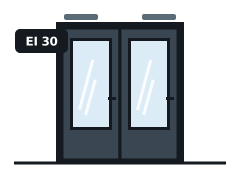
Doorsets with large glazed panels, tested as complete units.
Learn more →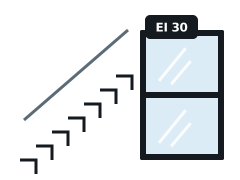
Glazed screens and doors on protected stairs, lobbies and corridors.
Learn more →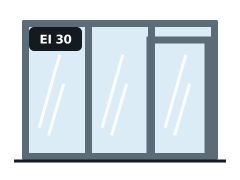
Light, modern aluminium framing tested for fire.
Learn more →Send drawings, a fire risk assessment action or photos of the glass marks.
We visit Dronfield to measure, record existing marks and check the frames and substrate.
We set out the system, glass, evidence and programme, with a fixed price.
We install, photograph seals and fixings before closing up, and hand over the schedule.
Send sizes, photos of any glass marks or your inspection report and we will come back with the right tested system.