
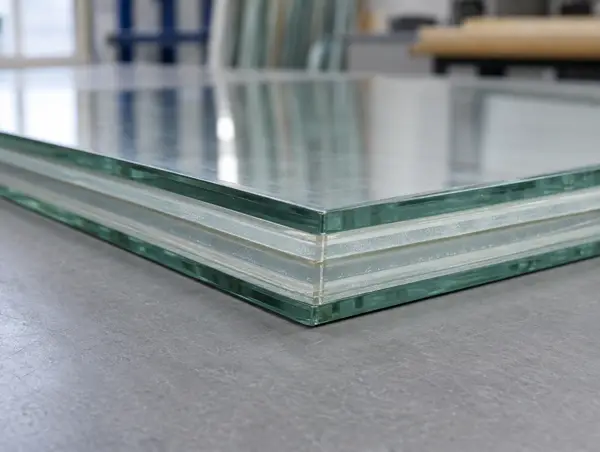
EI 30 – EI 120
Insulated Fire Glass (EI)
EI 30 to EI 120 glass that blocks heat as well as flames.
Learn more →Integrity, radiation control and insulation explained in plain English.
E, EW and EI are fire-resistance classes from BS EN 13501-2. E means integrity: the glazing stops flames and hot gases passing. EW adds a limit on heat radiated through the glass. EI adds insulation, limiting the temperature rise on the protected face so people can pass more safely. The number that follows, such as 30 or 60, is the tested time in minutes.
Integrity is the ability of a glazed system to stop flames and hot gases getting through to the protected side. In a fire test, integrity fails when sustained flaming appears on the unexposed face, when a gap opens beyond set limits, or when a cotton pad held near a gap ignites.
An E 30 screen has kept integrity for at least 30 minutes. It does not limit heat, so the glass on the protected side can become very hot.
EW glazing keeps integrity and also limits radiated heat. In the test, the radiation measured one metre from the unexposed face must not exceed 15 kW/m² for the classified time.
That reduces the risk of igniting materials near the glass and of harming people at a distance, but it is not the same as insulation.
EI glazing keeps integrity and limits the temperature rise on the unexposed face: an average rise of no more than 140°C and no single point above 180°C over the starting temperature.
Because the temperature rise on the protected side is limited, people can pass close to EI glass more safely during a fire, which is why it is used on many escape routes.
Your fire strategy, architect or building control body sets the classification for each element. The usual decision is between integrity glass, which is thinner and cheaper, and insulating glass, which has far fewer restrictions on where it can be used.
If you have a drawing that simply says 'fire-rated' or 'FD30', ask for the classification in E, EW or EI terms before ordering.
No. The classification belongs to the complete tested system: glass, frame, beads, seals and fixings, within stated pane sizes. Fitting rated glass into an untested frame does not create a rated screen.
Updated 09/10/2026. General guidance only; your fire strategy, designer and building control body decide what applies to a specific building.
EI 30 to EI 120 glass that blocks heat as well as flames.
Learn more →
E and EW glass where flames and hot gases must be stopped.
Learn more →
Integrity and insulating fire glass supplied and fitted into tested frames.
Learn more →Send sizes, photos of any glass marks or your inspection report and we will come back with the right tested system.